U.S. Employers Cut 23,000 Jobs in July as Unemployment Rate Rises to 4.1%
The Labor Department also revised down May and June payroll gains by a combined 103,000 jobs, while health care continued to add positions and retail and local government education shed them.
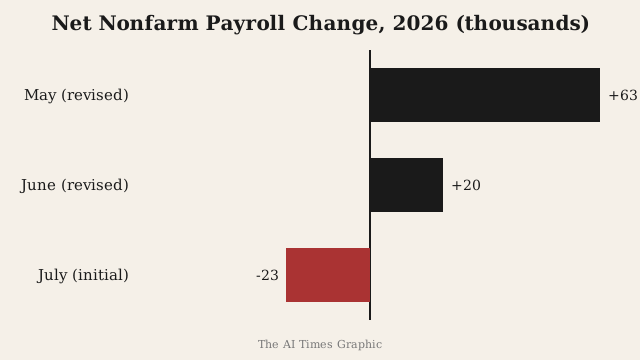
U.S. employers cut a net 23,000 jobs in July and the unemployment rate ticked up to 4.1%, the Bureau of Labor Statistics reported Friday in its Employment Situation summary for July 2026 (release USDL-26-1291). Both figures "changed little" over the month, the agency said, but the payroll count marked a second straight monthly decline in a labor market that had averaged monthly gains of 34,000 jobs over the prior 12 months.
The number of unemployed people held at 6.9 million in July. The labor force participation rate was 61.4% and the employment-population ratio was 58.9%, both little changed from June but down 0.7 and 0.5 percentage points, respectively, since January, according to the report. The number of people on temporary layoff rose by 153,000 to 921,000 during the month, while the number of long-term unemployed — those jobless 27 weeks or more — edged down to 1.8 million.
BLS also revised down its prior estimates for May and June. May's payroll gain was cut from 129,000 to 63,000, and June's was cut from 57,000 to 20,000, leaving combined employment for the two months 103,000 lower than previously reported. The agency attributed the revisions to additional data received from businesses and government agencies since the initial estimates, along with recalculated seasonal factors.
By sector, local government education lost 50,000 jobs in July after little net change over the prior year, and retail trade lost 19,000, driven by declines at warehouse clubs, supercenters and other general merchandise retailers (-21,000) and at gasoline stations and fuel dealers (-5,000). Financial activities employment fell by 14,000, reflecting losses in credit intermediation (-9,000) and insurance carriers (-7,000); the sector is now down 121,000 jobs since a recent peak in May 2025. Health care continued to add jobs, up 22,000, though at a slower pace than its prior 12-month average gain of 36,000, with ambulatory health care services accounting for 18,000 of the increase. BLS said employment showed little change in mining and oil and gas extraction, construction, manufacturing, wholesale trade, transportation and warehousing, information, professional and business services, social assistance, leisure and hospitality, and other services.
Average hourly earnings for all private nonfarm employees were little changed at $37.62, up 3.2% over the year. The average workweek held steady at 34.3 hours.
In a statement issued the same day, Acting Labor Secretary Keith Sonderling pointed to private-sector hiring, saying "the labor market is seeing continued growth in private sector employment, adding 30,000 jobs in July and 426,000 this year," and that the administration is "adding jobs in key sectors with gains in construction and manufacturing driven by the trillions of dollars of investments that are pouring into the United States."
BLS said the Employment Situation report for August 2026 is scheduled for release on Friday, Sept. 4. The agency also plans to publish a preliminary estimate of its annual benchmark revision to establishment survey data on Aug. 28, alongside first-quarter 2026 data from the Quarterly Census of Employment and Wages; a final benchmark revision will follow with the January 2027 Employment Situation report in February 2027.