Total Solar Eclipse Will Cross the Arctic, Iceland and Spain on Aug. 12
NASA says the Moon's shadow will sweep from far northern Siberia across Greenland, Iceland and Spain, with a partial eclipse visible across parts of Europe, North America and Africa; North Carolina will not see it.
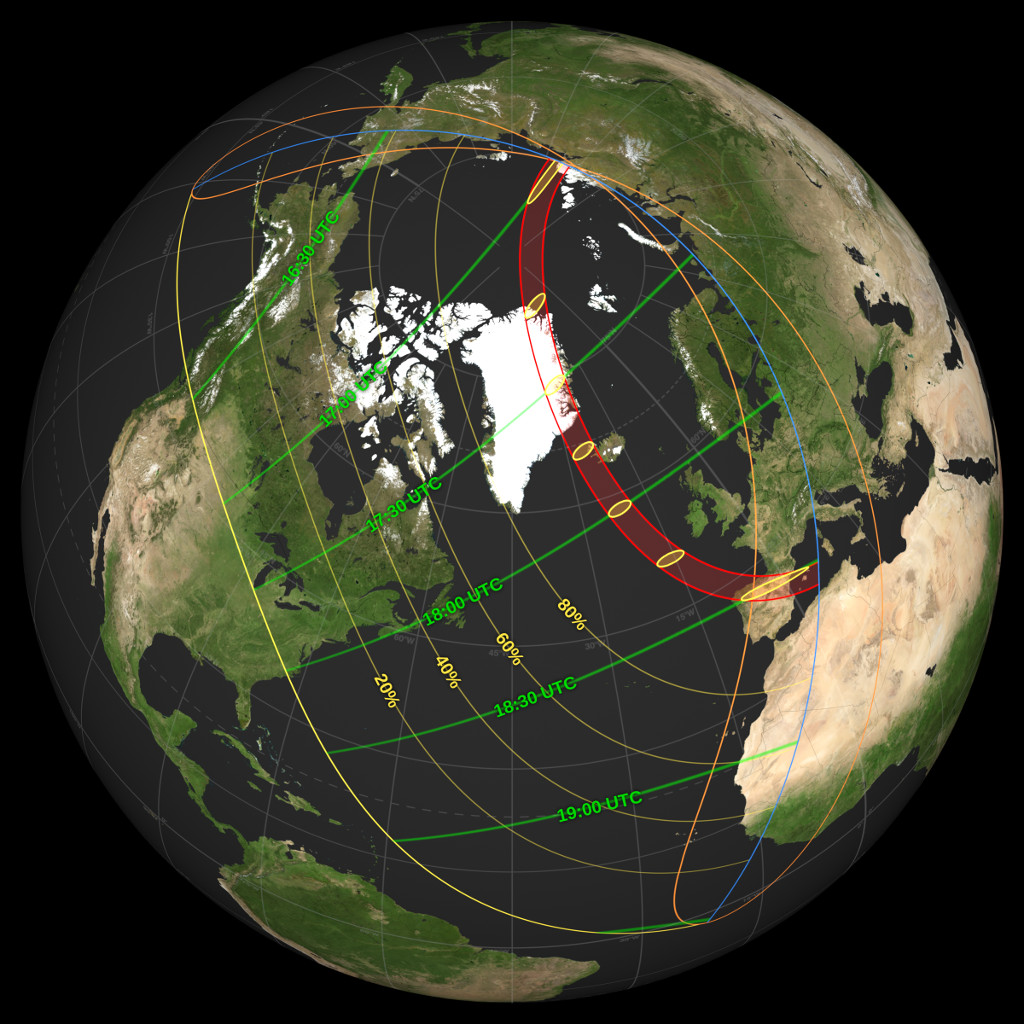
A total solar eclipse will cross the Northern Hemisphere on Wednesday, Aug. 12, with the Moon's shadow sweeping from far northern Siberia near the North Pole south through the Arctic and North Atlantic oceans before crossing Greenland, Iceland, and Spain, NASA said.
Within that path of totality, the Sun will be completely blocked for less than two minutes in most locations. Observers nearest the center of the path, in Greenland, Russia, or the North Atlantic, will see totality last close to two and a half minutes, according to NASA. In León, Spain, totality is expected around 8:28-8:30 p.m. local time; in Reykjavík, Iceland, around 5:48-5:49 p.m. local time.
Outside the path of totality, a partial eclipse will be visible across the rest of Europe and parts of North America and Africa, per NASA's Scientific Visualization Studio eclipse map. North Carolina and the rest of the continental United States fall outside both the totality path and the partial-eclipse zone shown on NASA's map, meaning the eclipse will not be visible from the Triangle.
NASA emphasized that safe viewing depends on location and timing: "Only during those brief moments of totality, when the Moon completely blocks the Sun's bright face, can viewers look directly at the eclipse without eye protection." Before and after totality, and for anyone outside the path of totality watching the partial phases, NASA says eye protection is required — eclipse glasses meeting the ISO 12312-2 safety standard, a handheld solar viewer, or an indirect method such as a pinhole projector. Regular sunglasses do not provide adequate protection.
NASA plans to stream coverage of the eclipse live at nasa.gov/live starting at 1:15 p.m. EDT on Aug. 12, with views from multiple locations along the path and interviews with agency scientists.